How to Build Credit With an ITIN (No SSN Required)
No Social Security Number does not mean no credit score. Here is the step-by-step path from an ITIN to a real credit history: which accounts work, how to check your reports without an SSN, and what changes if you get an SSN later.

Svetlana Burninova
CTO & Co-Founder
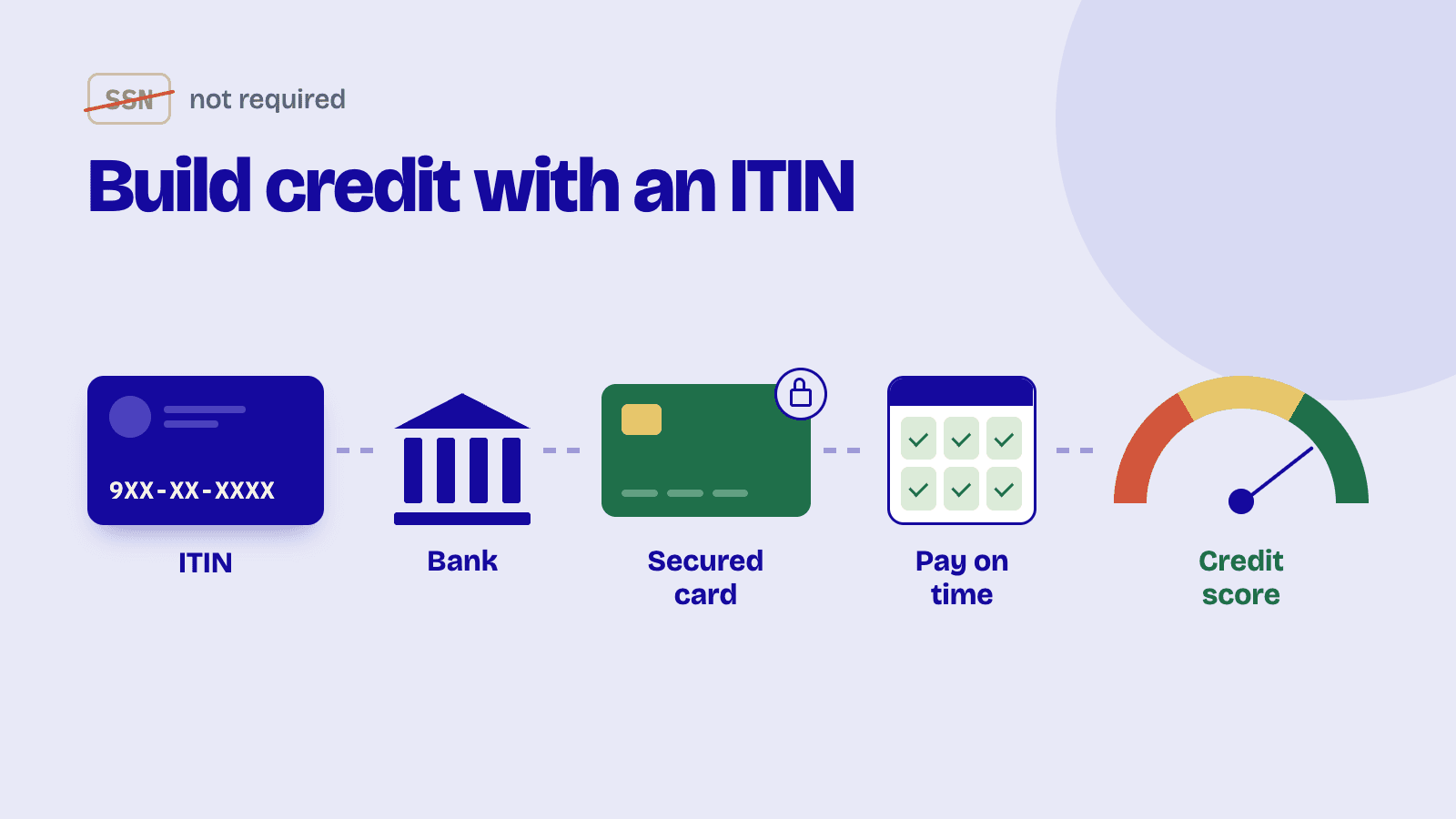
You do not need a Social Security Number to build US credit. The credit bureaus can open and match a file using your name, date of birth and address, and lenders can report your accounts under an ITIN. The usual path: get an ITIN with Form W-7, open a bank account, start with a secured card from an issuer that accepts ITIN applicants, pay on time and keep balances low. If you get an SSN later, ask each bureau to transfer your history to it.
One of the most stubborn myths in immigrant finance is that you need a Social Security Number to have a credit score. You do not. No law requires an SSN to open a credit file, and the three credit bureaus, Equifax, Experian and TransUnion, can identify you by your name, date of birth and address instead. What you need is a lender willing to open an account for you and report it, and for most people without an SSN the key that opens that door is an ITIN.
If you are not sure what an ITIN is or how to get one, start with our guide to what an ITIN is and how to apply. This article assumes you have one (or are getting one) and focuses on the next question: turning it into a credit history.
What an ITIN can and cannot do for your credit
An ITIN is a nine-digit tax number from the IRS, issued with Form W-7. It exists for tax reporting, not identification, but many banks and card issuers accept it in place of an SSN on a credit application. When they do, your payments get reported to the bureaus and a credit file builds exactly the way it would with an SSN.
What it cannot do: force a lender to accept it. Each bank decides whether to take ITIN applications, and policies differ by issuer and even by card. Several major issuers have accepted ITINs for years, but the only reliable answer is the one you get from the issuer directly, in writing or on the application itself, before you apply. A rejected application still triggers a hard inquiry, so ask first.
One honest note about 2026: federal guidance issued in June 2026 may make some lenders more cautious about how they evaluate applicants without an SSN. The guidance is not a law and no major issuer has publicly ended ITIN applications, but it is one more reason to confirm the current policy with the issuer rather than rely on an article, including this one.
Step 1: Open a bank account first
A checking account is not a credit account, but nearly every secured card requires one for the deposit and payments, and a banking relationship helps the application. Federal rules let banks accept a passport or consular ID instead of an SSN; our guide to opening a US bank account without an SSN lists what to bring.
Step 2: Start with a secured credit card
A secured card is the standard first credit account: you put down a deposit, usually $200 to $500, and that deposit becomes your credit limit. The deposit removes most of the lender's risk, which is why secured cards are the product most often open to ITIN applicants. Make a small purchase or two each month and pay the statement in full. Paying in full also means the APR never actually costs you anything.
Step 3: Add a second account type when the first is established
After six months to a year of on-time payments, a second account strengthens the file: a credit-builder loan from a credit union or CDFI, an upgrade from the secured card to an unsecured one, or being added as an authorized user on a family member's established card. Two account types reported over time build a thicker file than one card alone.
Step 4: Protect the two numbers that matter most
Payment history and utilization dominate your score. On-time payments every single month, and balances kept under roughly 30% of the limit (lower is better), do more than any other habit. The full mechanics are in our credit score guide for immigrants, and the broader from-zero playbook is in how to build credit in the US from zero.
Step 5: Check your reports, the ITIN way
Here is a practical snag nobody warns you about: annualcreditreport.com, the official free-reports site, requires an SSN. With an ITIN you instead request your report from each bureau directly by mail, with copies of your ID and proof of address. Each bureau has its own form and document list, and policies differ, so check the bureau's current instructions (or call) before you send anything. It is slower but it works, and checking your own report never hurts your score.
When you get an SSN later
An ITIN file does not die when you get an SSN. Contact each bureau, give them the new number, and ask them to link your existing history to it. Done right, the credit you built under the ITIN carries over instead of starting from zero. Then stop using the ITIN on new applications; the IRS also expects you to stop filing taxes with it once you have an SSN.
Two housekeeping points while you still use the ITIN: it expires if you do not use it on a federal tax return for three consecutive years, and an expired ITIN is a common silent reason applications stall. Keep it active, and keep your name and address consistent across applications so the bureaus match everything to one file.
Where this leads
A credit file you start this year is what qualifies you for an unsecured card next year, a car loan after that, and eventually a mortgage; ITIN mortgage programs exist, and we cover that road in from credit card to mortgage. The habits are boring on purpose: one or two accounts, small balances, every payment on time.
Frequently asked questions
Can I really get a credit score without an SSN?
Yes. The bureaus can open and match a credit file using your name, date of birth and address, and lenders can report your accounts under an ITIN. People without an SSN hold real FICO and VantageScore scores; what they usually lack is a lender who reports, which is what the steps above fix.
Which credit cards accept an ITIN?
Policies vary by issuer and by card, and they change, so confirm directly with the issuer before applying. Several major US issuers have accepted ITIN applications for years, and many credit unions and CDFIs are explicitly ITIN-friendly. A rejected application costs you a hard inquiry, so ask first rather than apply and hope.
How long until I have a usable score?
Typically around six months of reported history to generate a first score, and 12 to 24 months of clean history to reach the range where unsecured cards and fair loan rates open up.
Can I check my credit report with an ITIN?
Yes, but not through annualcreditreport.com, which requires an SSN. Request your report from each bureau by mail with copies of your ID and proof of address, following that bureau's current instructions.
What happens to my credit history when I get an SSN?
Ask each bureau to transfer your file to the new number. Your history carries over; you do not start from zero. Use the SSN on everything going forward.
Does my ITIN expire?
Yes, if it is not used on a federal tax return for three consecutive years. Renewing is the same Form W-7. An expired ITIN is a common hidden reason credit and tax paperwork stalls.
YPA-FINANCE helps immigrants and newcomers understand credit score, budgeting, and debt payoff in 13 languages, with simple tools, plain language, and support that feels human.
Related Articles
About this page
Written and reviewed by Svetlana Burninova, CTO & Co-Founder, YPA-FINANCE. Last reviewed: .
How we write and review our content
Spot an error? Email hello@ypa.finance.